
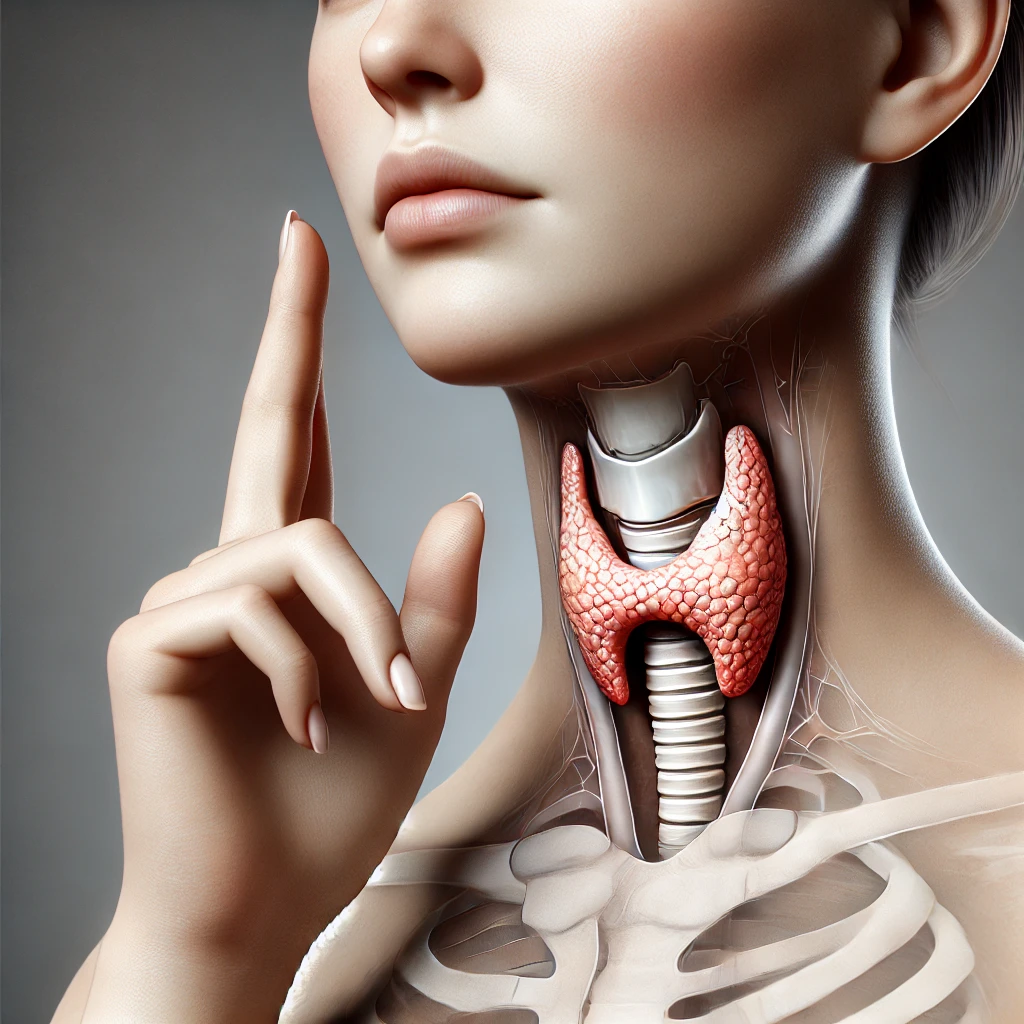
Thyroid hormones
TSH
Thyroid stimulating hormone (TSH) is produced in the pituitary gland in order to regulate the production of thyroid hormones thyroxine (T4) and triiodothyronine (T3) by the thyroid gland. If thyroid hormones in the blood are low, then more TSH is produced to stimulate the thyroid gland to produce more of them. If thyroid hormone levels are high, then the pituitary produces less TSH to slow the production of thyroid hormones. If TSH is too high or too low, it normally signifies that there is a problem with the thyroid gland which is causing it to under or over produce thyroid hormones. Sometimes a disorder of the pituitary gland can also cause abnormal TSH levels.
Free thyroxine
Thyroxine (T4) is one of two hormones produced by the thyroid gland. It works to speed up the rate of your metabolism. Most T4 is bound to carrier proteins in the blood – it is only the free, or unbound, T4 that is active in the body, which is measured in this test. Free T4 is the less active of the two main thyroid hormones. To have an impact on your cells it needs to convert to the more active T3 when your body needs it.